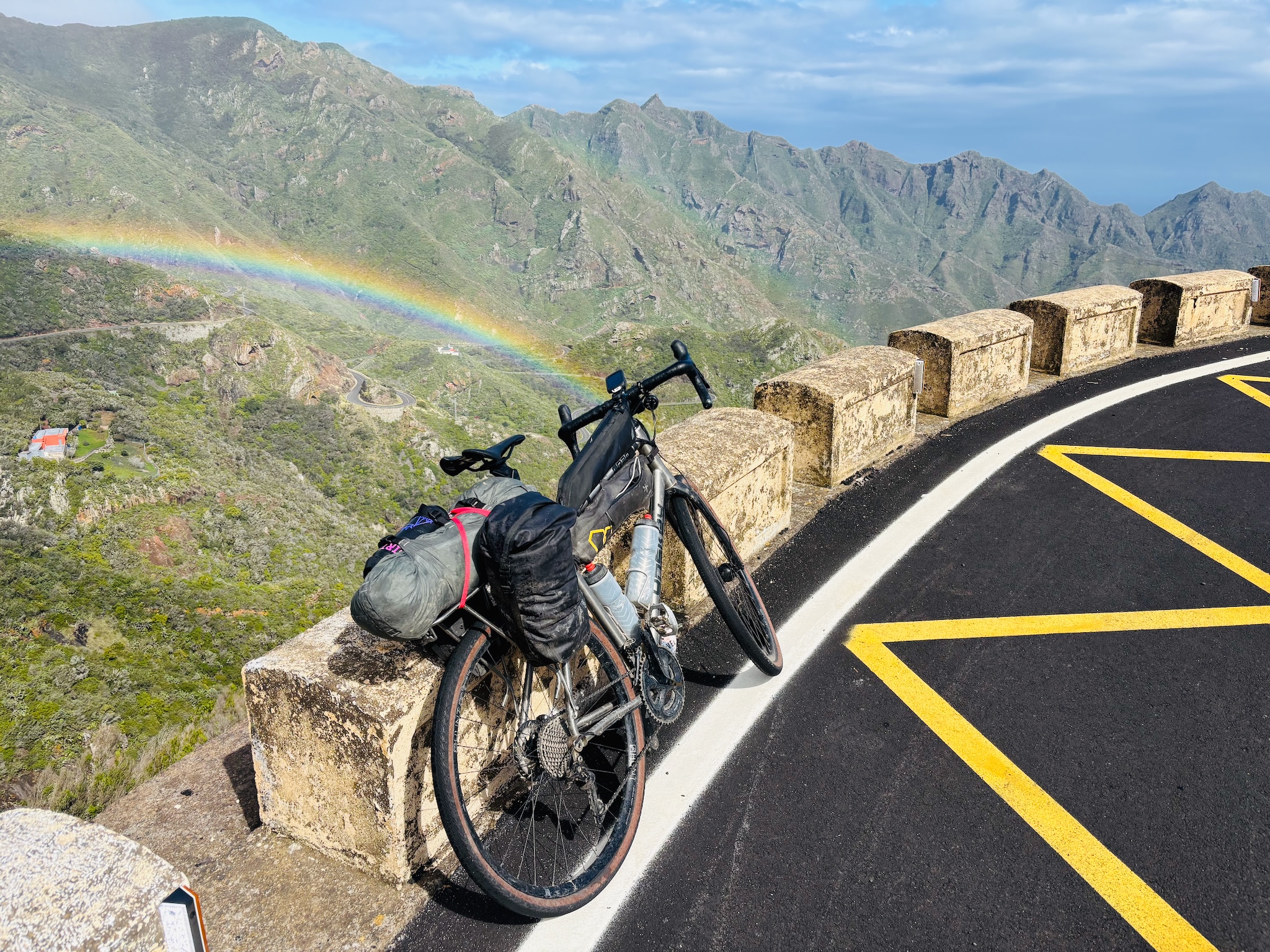
Going anyway.
Five Canary Islands, off and on road, six weeks after losing my job. A bivy bag, a tent, and a plan that mostly made sense.
I lost my job in February 2025. Six weeks later I was on a start line in Lanzarote with a hundred other people and a plan to cycle 800 kilometres across five islands. Going anyway felt like the right decision. I'm still not entirely sure why.
The GranGuanche is an island-hopping gravel event, Lanzarote to El Hierro via Fuerteventura, Gran Canaria and Tenerife, with ferry crossings in between. I'd booked it six months earlier as a holiday, back when I still had a job and a plan. The flights were booked. The girls were in the Czech Republic for Easter, and I was picking them up on the way back. It made logistical sense. Mostly.
Lanzarote
Day 1 · the lava fields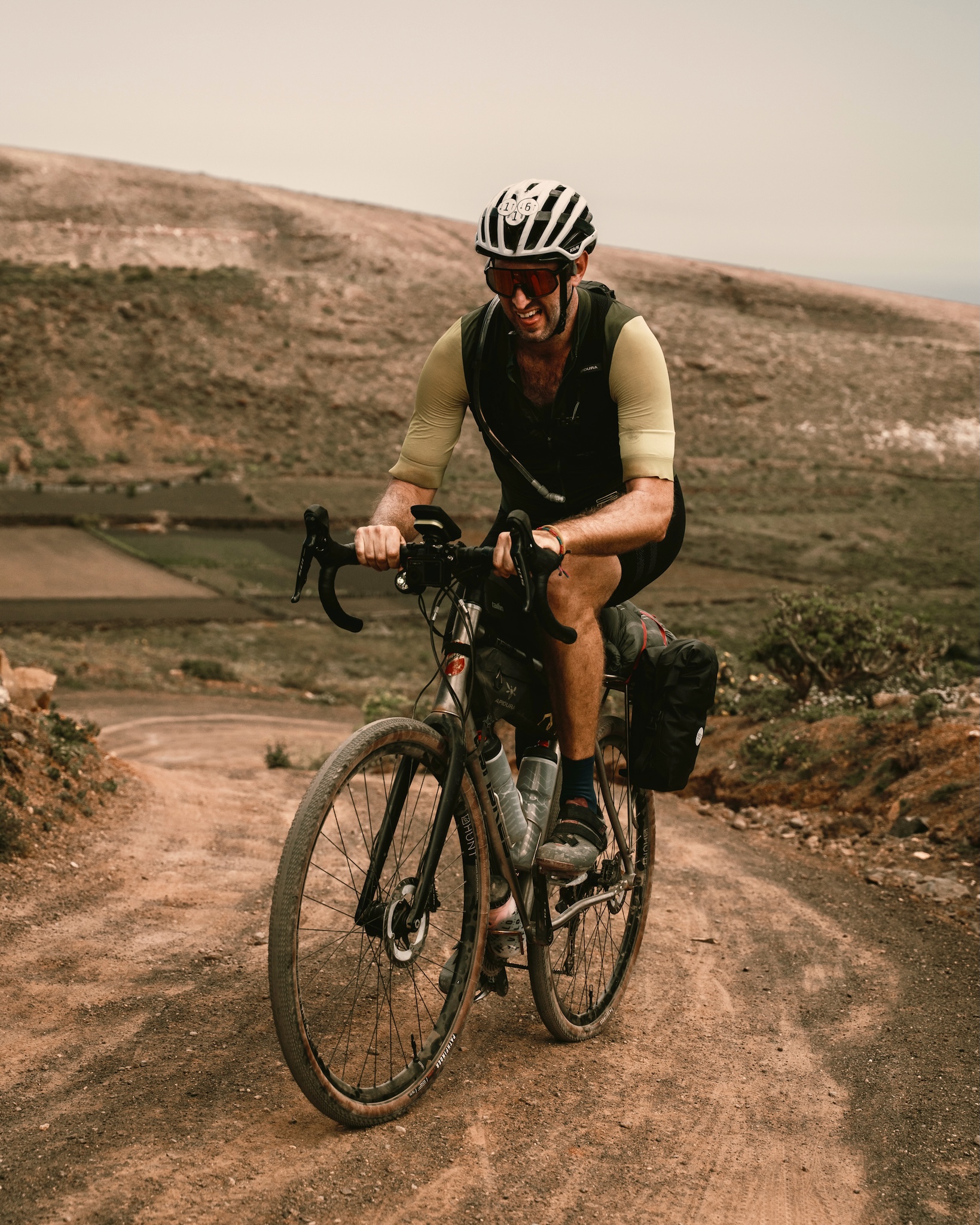
Lanzarote was extraordinary, black volcanic lava fields, colours I hadn't seen outside of photographs, ridges with views that made you stop even when you couldn't afford to. There was a race for the last ferry on day one: a hundred cyclists hammering the final section to make the crossing. I met John about twenty kilometres from the port. John the gardener, as he introduced himself, a calm, straightforward man who'd left a career to build something of his own. We talked a Spanish family with a van into running our bikes through the loading area, and made it with minutes to spare.
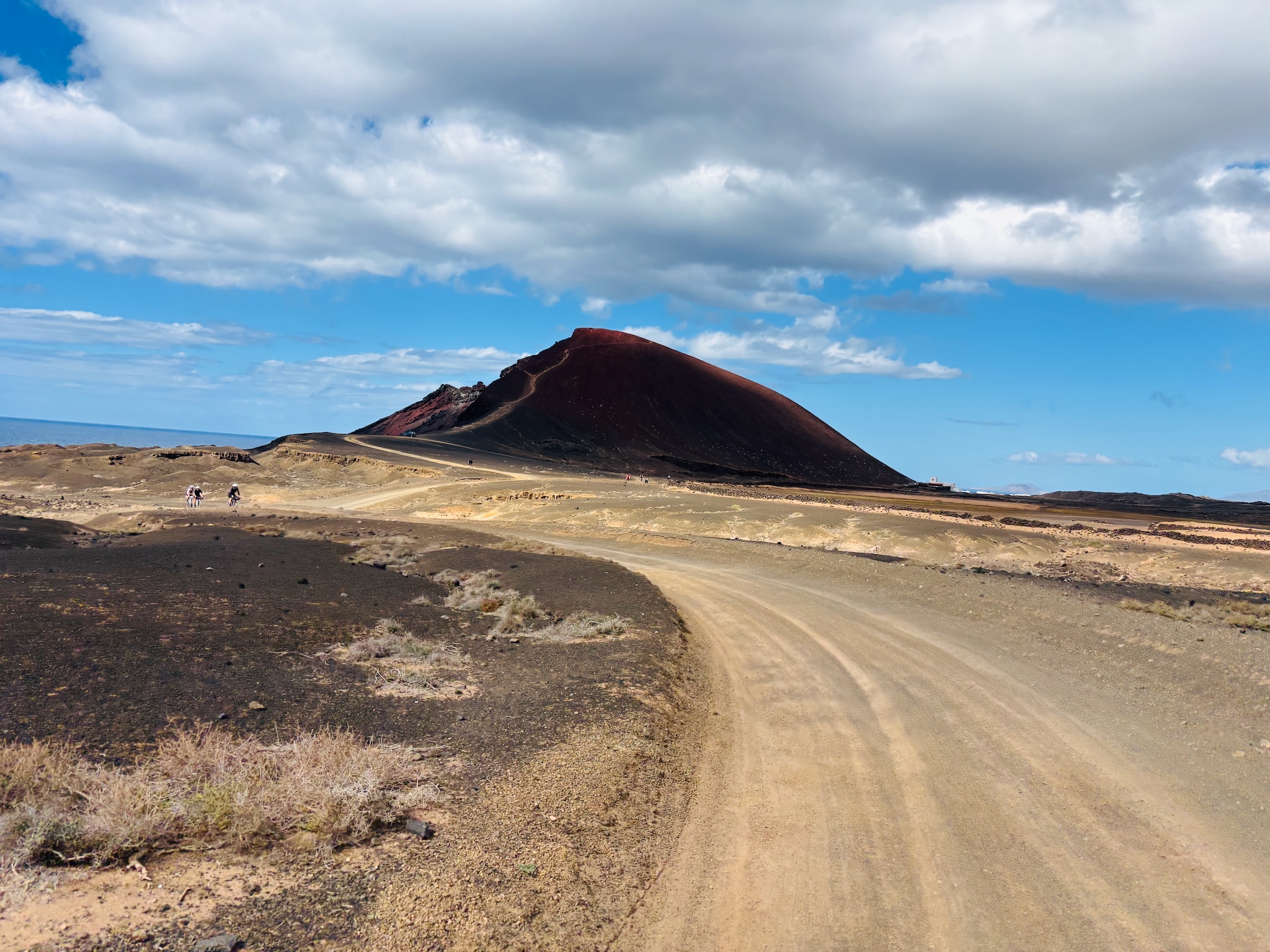
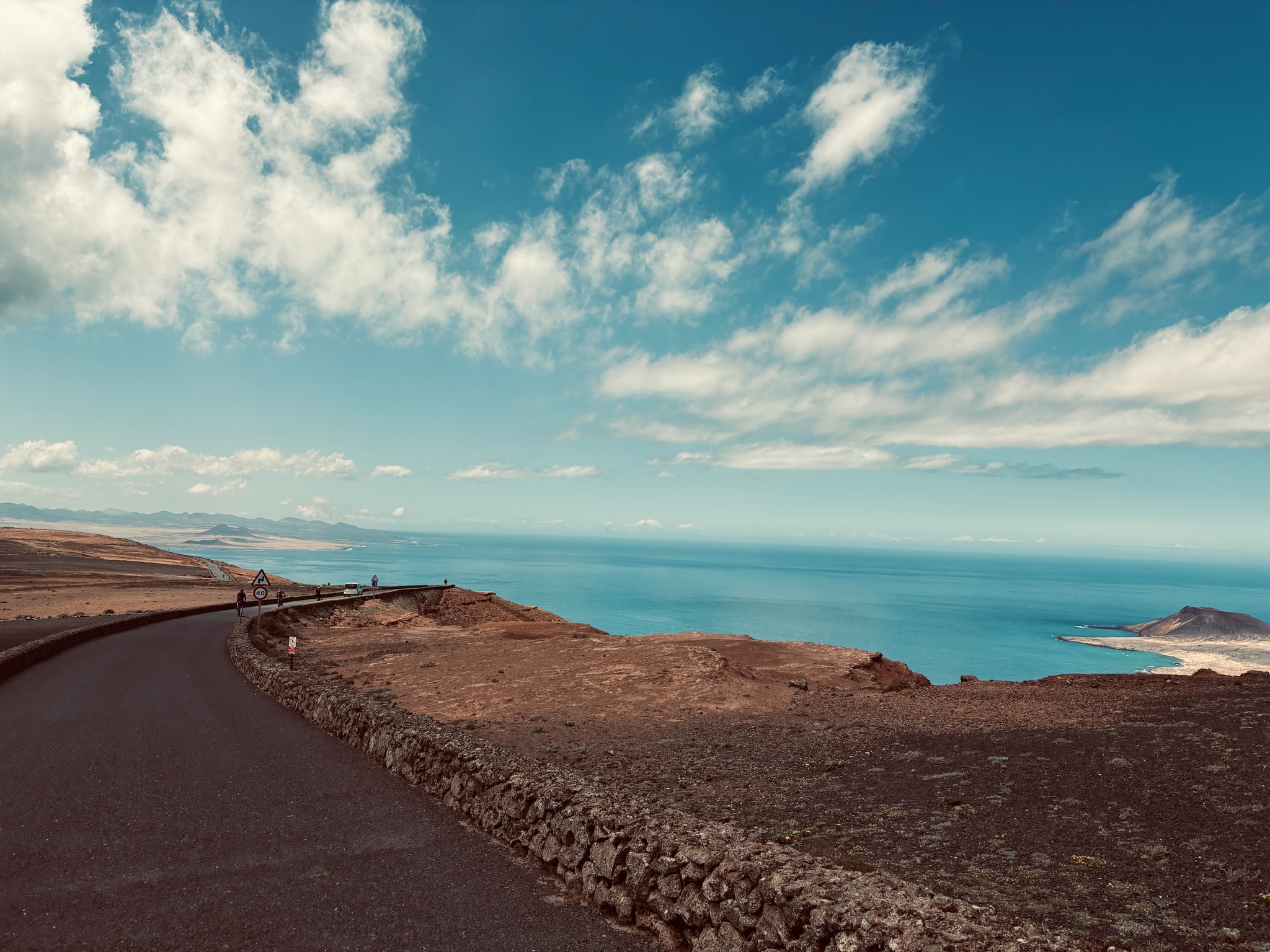
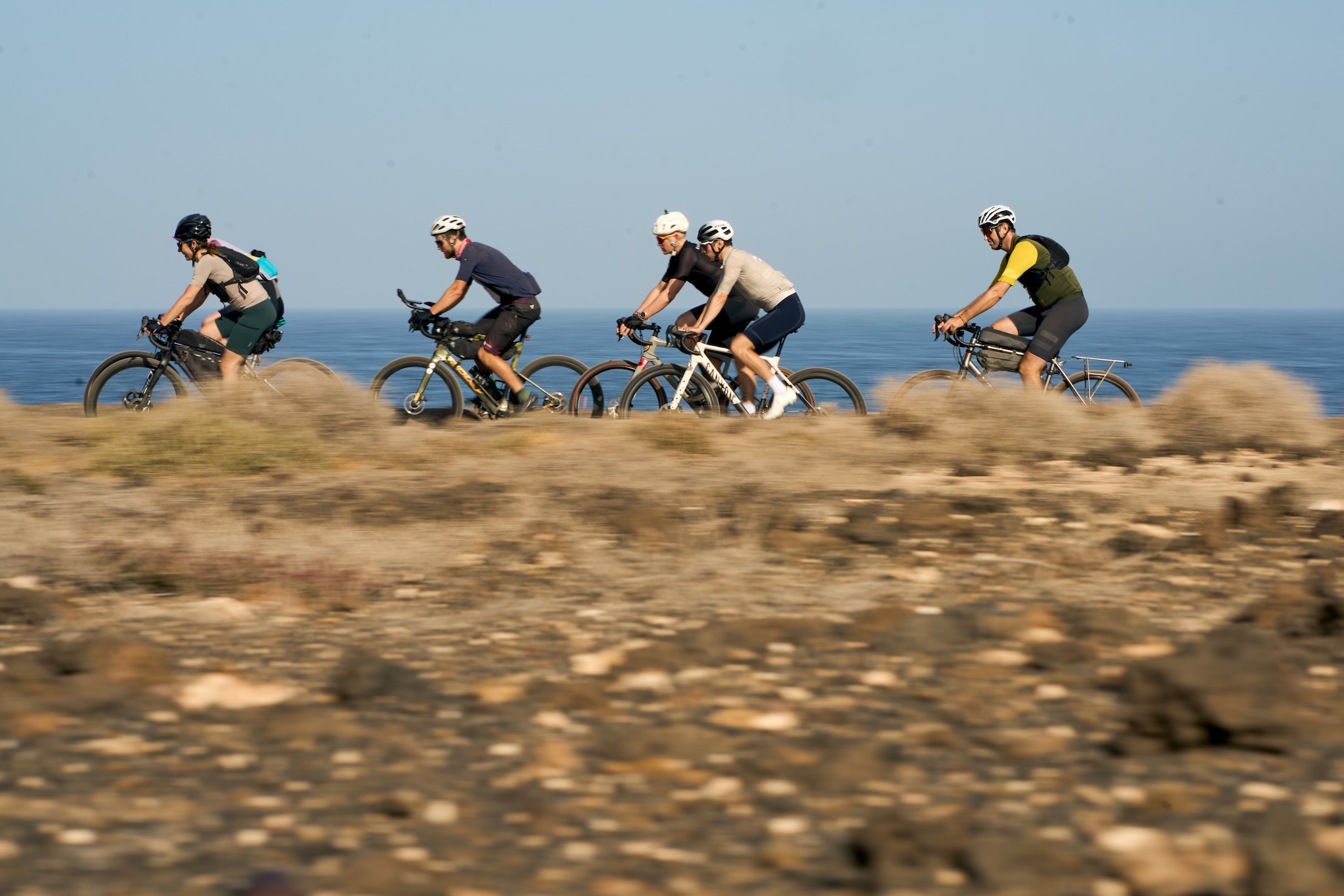
Colours I hadn't seen outside of photographs, and ridges with views that made you stop even when you couldn't afford to.
Fuerteventura
Day 2 · the mud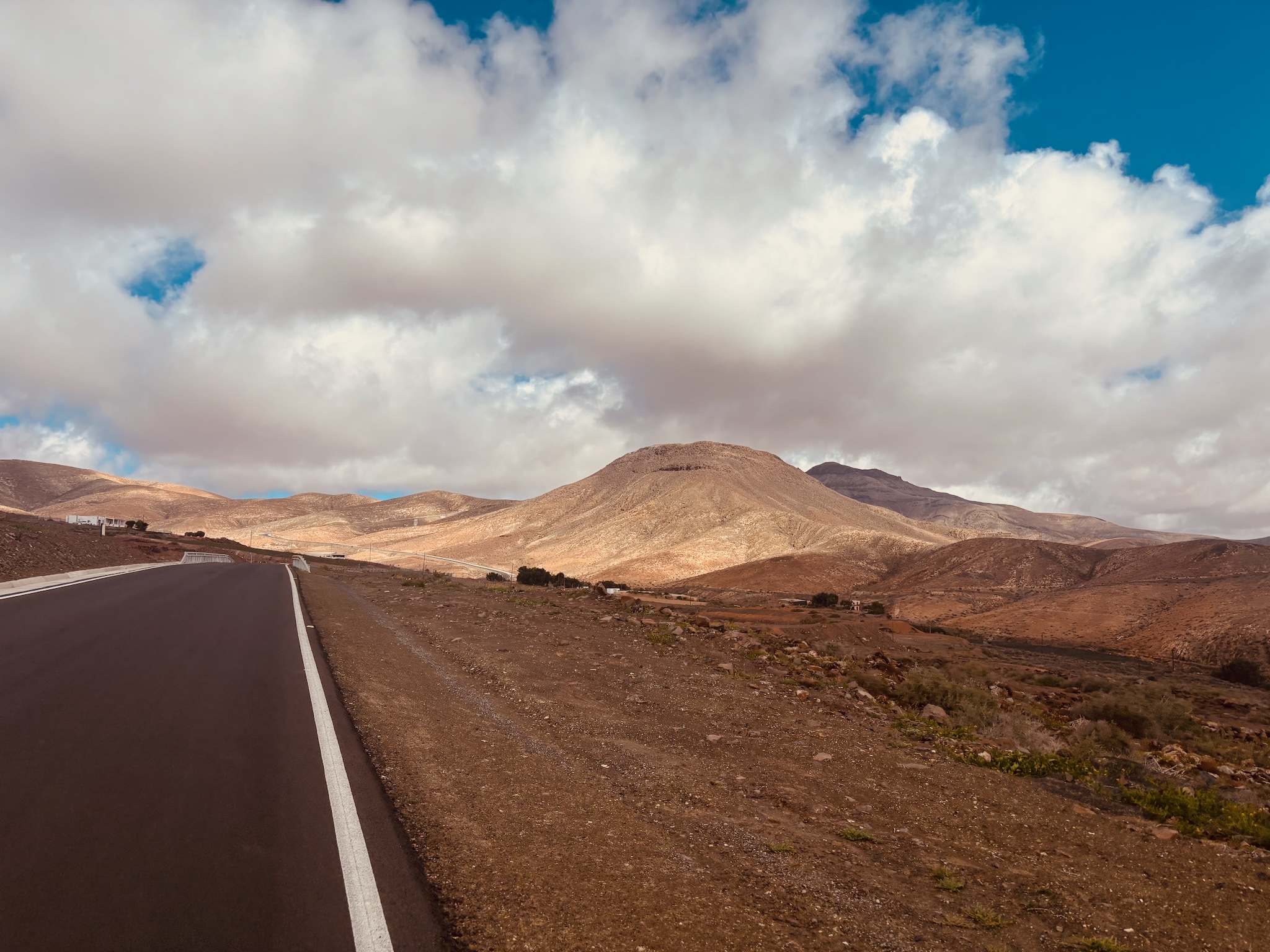
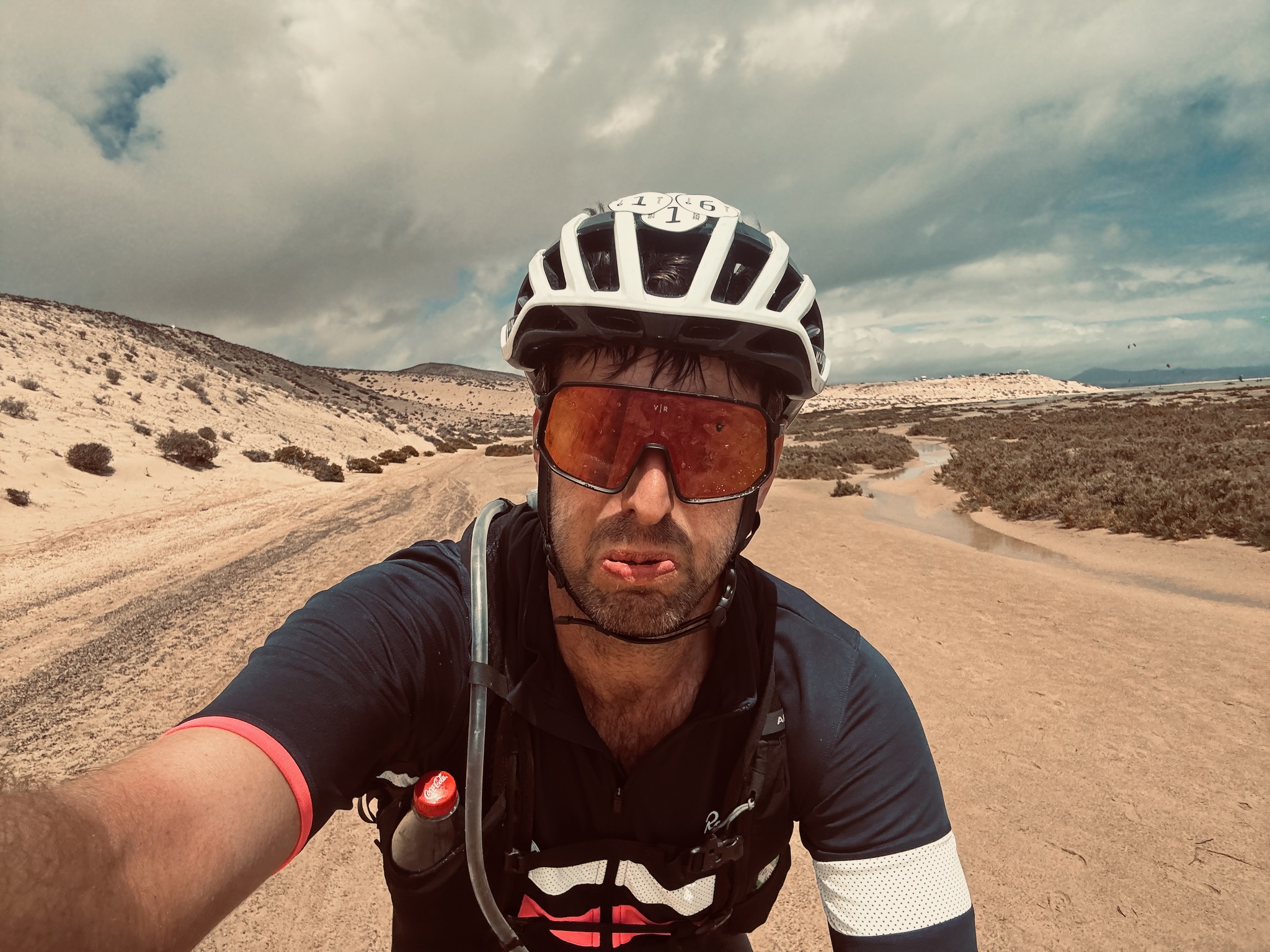
Fuerteventura was mud. Twenty kilometres from the finish of the second day, what should have been fast coastal track turned into deep sand and dirt. I waded with the bike, covered in filth, and made the last ferry of the day by a margin I didn't want to calculate.
Gran Canaria
Where it got hard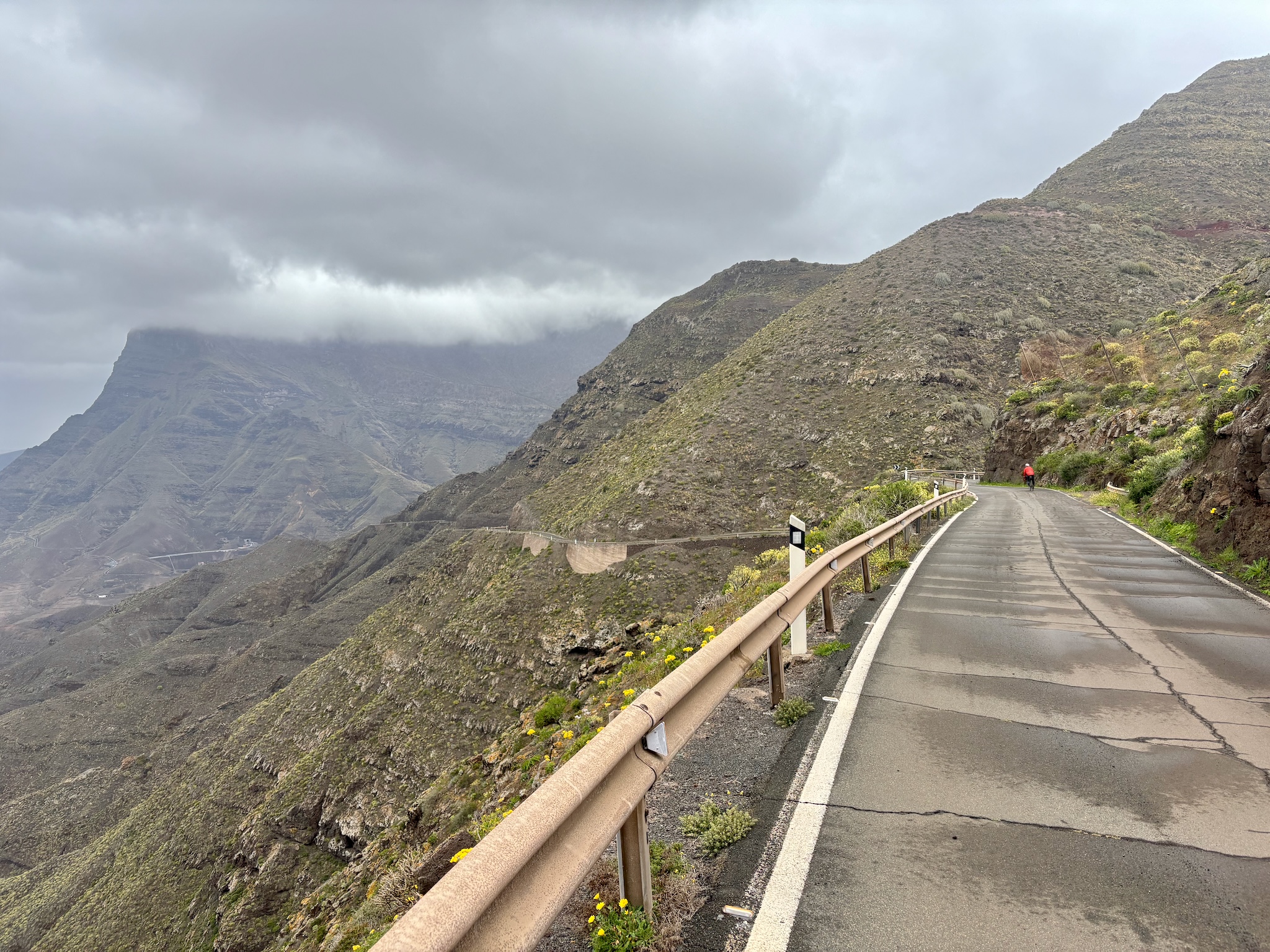
Gran Canaria was where things got hard. I decided to ride through the night rather than stop. This was foolish. By three in the morning I was falling asleep on the bike, so I bivvied in a lay-by, got spooked by birds and strange noises, and lay there for an hour not really sleeping before pushing on into the dark.
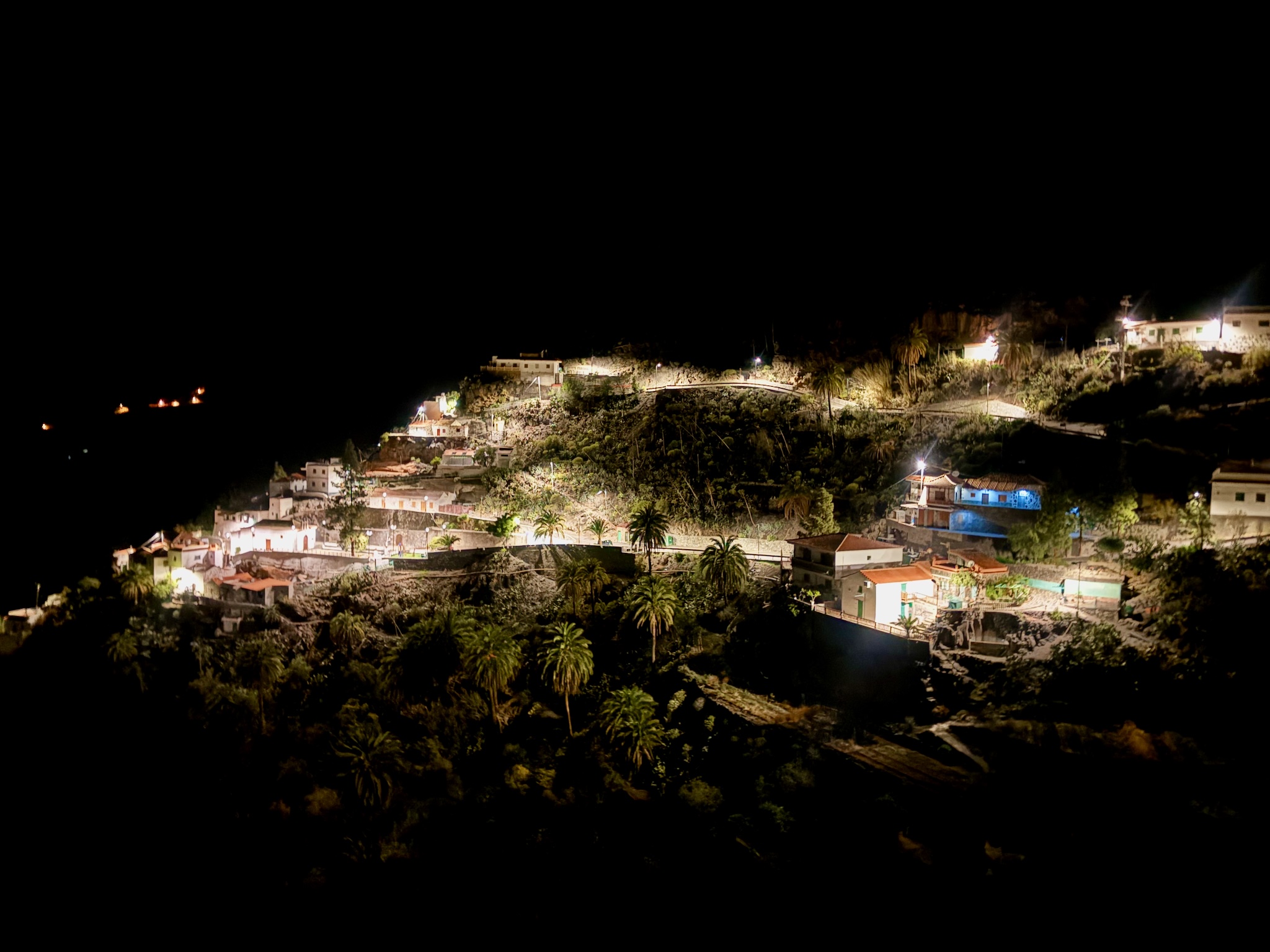
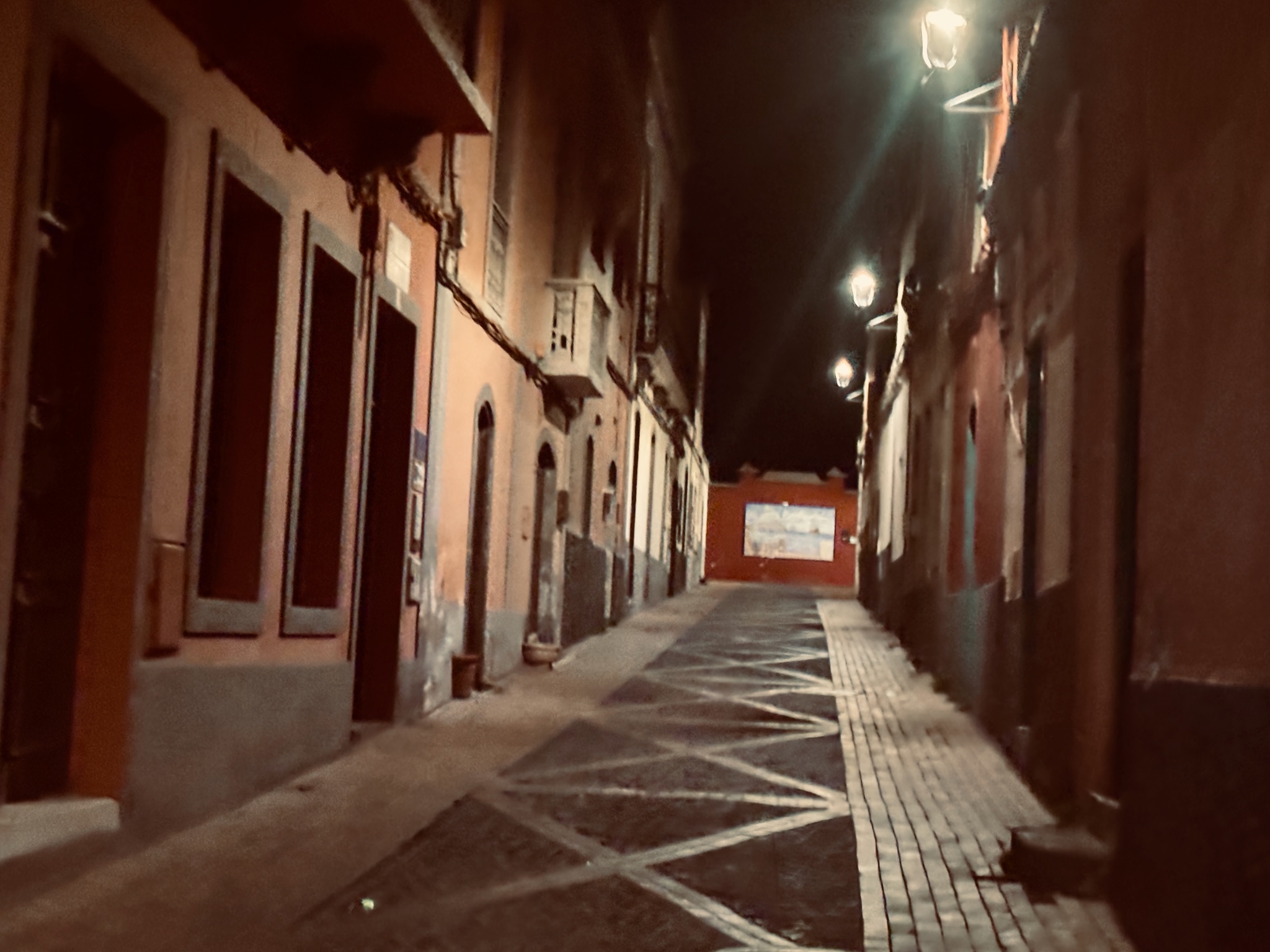
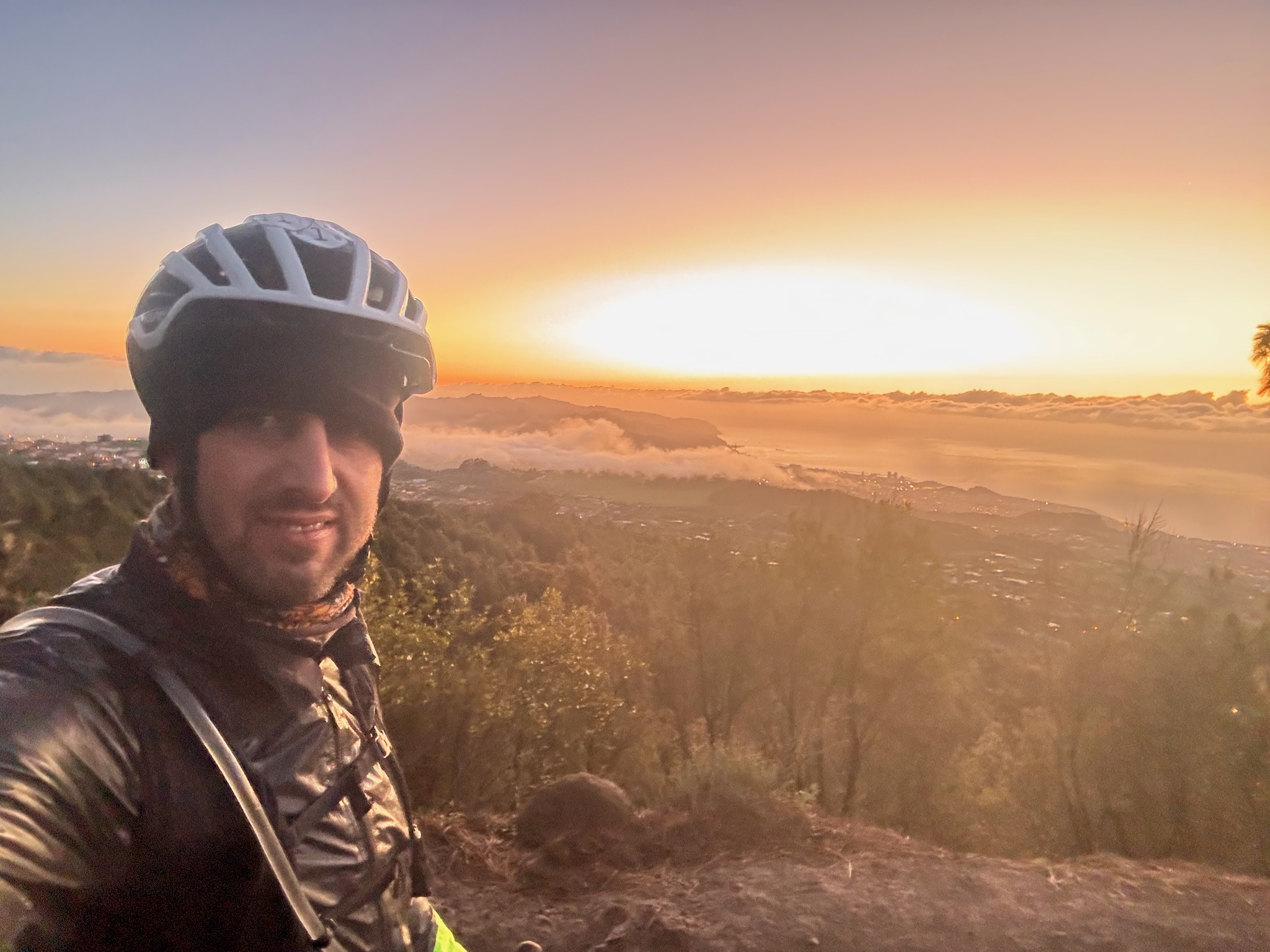
The sunrise was worth it, red rock and colour like nothing I'd seen, something close to what I imagine the Grand Canyon looks like. But by mid-afternoon I was ill and exhausted, lying down on a track trying to find the energy to keep going. Caroline found me what looked like accommodation on the map; it turned out to be a boarded-up camping hut. I rode back to a restaurant a mile away, got a proper meal, and the owner, without being asked, offered me a covered shelter for the night and lit a small fire. He left coffee out for the morning. The big climb came next: two thousand metres from valley floor to ridge, on the bike at four in the morning, riding through a night-lit village that felt completely still, then up into the dark.
Tenerife
The volcano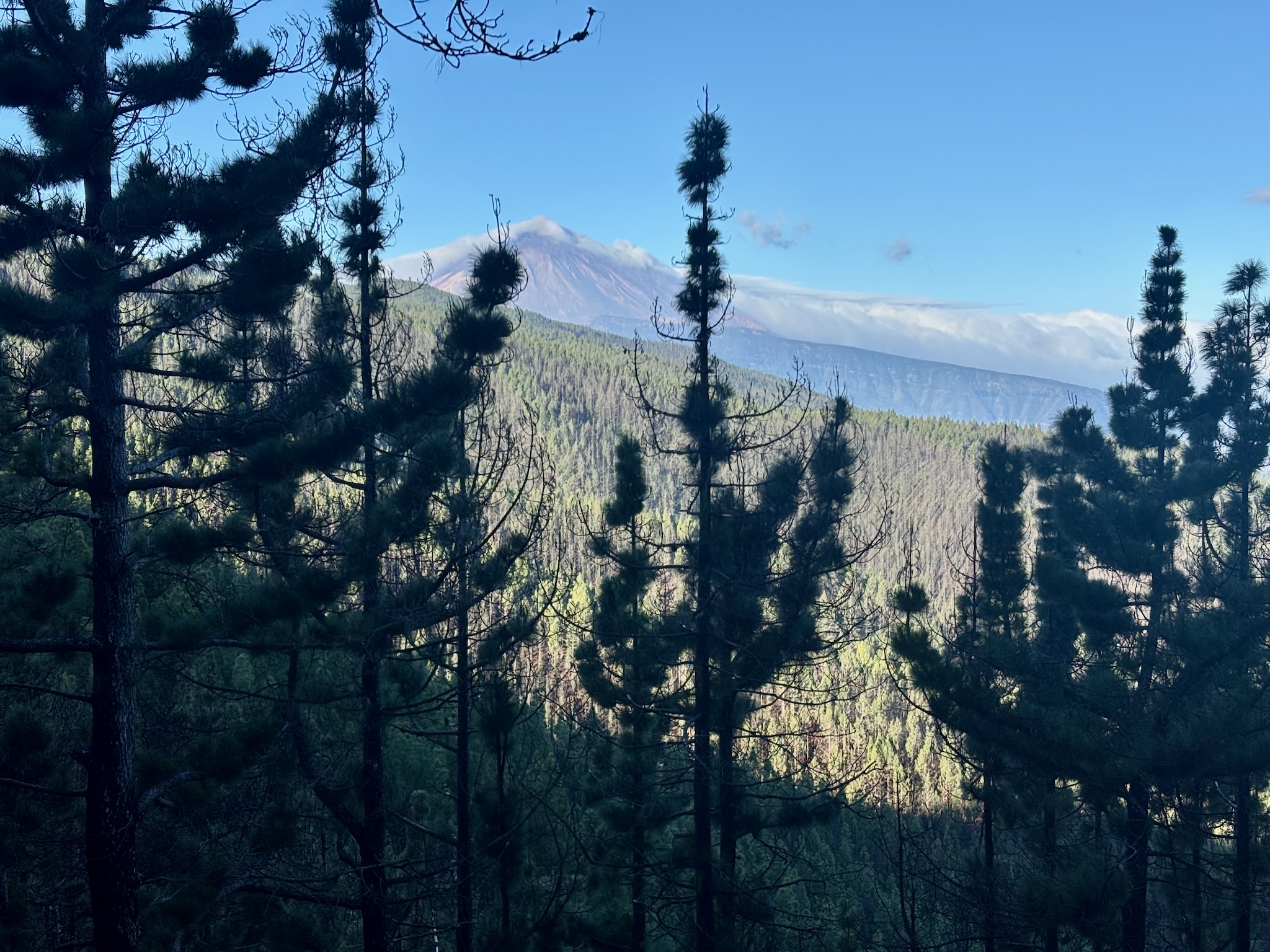
Tenerife had the volcano, Teide, the highest point in Spain, sitting above the clouds. We rode as a four toward the summit in worsening weather. The storm hit properly near the top; the organisers diverted the route around the base rather than over it. The descent was spectacular and brutal, crosswinds that made straight lines impossible, gusts that shoved the bike sideways without warning. The others pulled ahead. I found a bar to shelter in and sat there for a while.
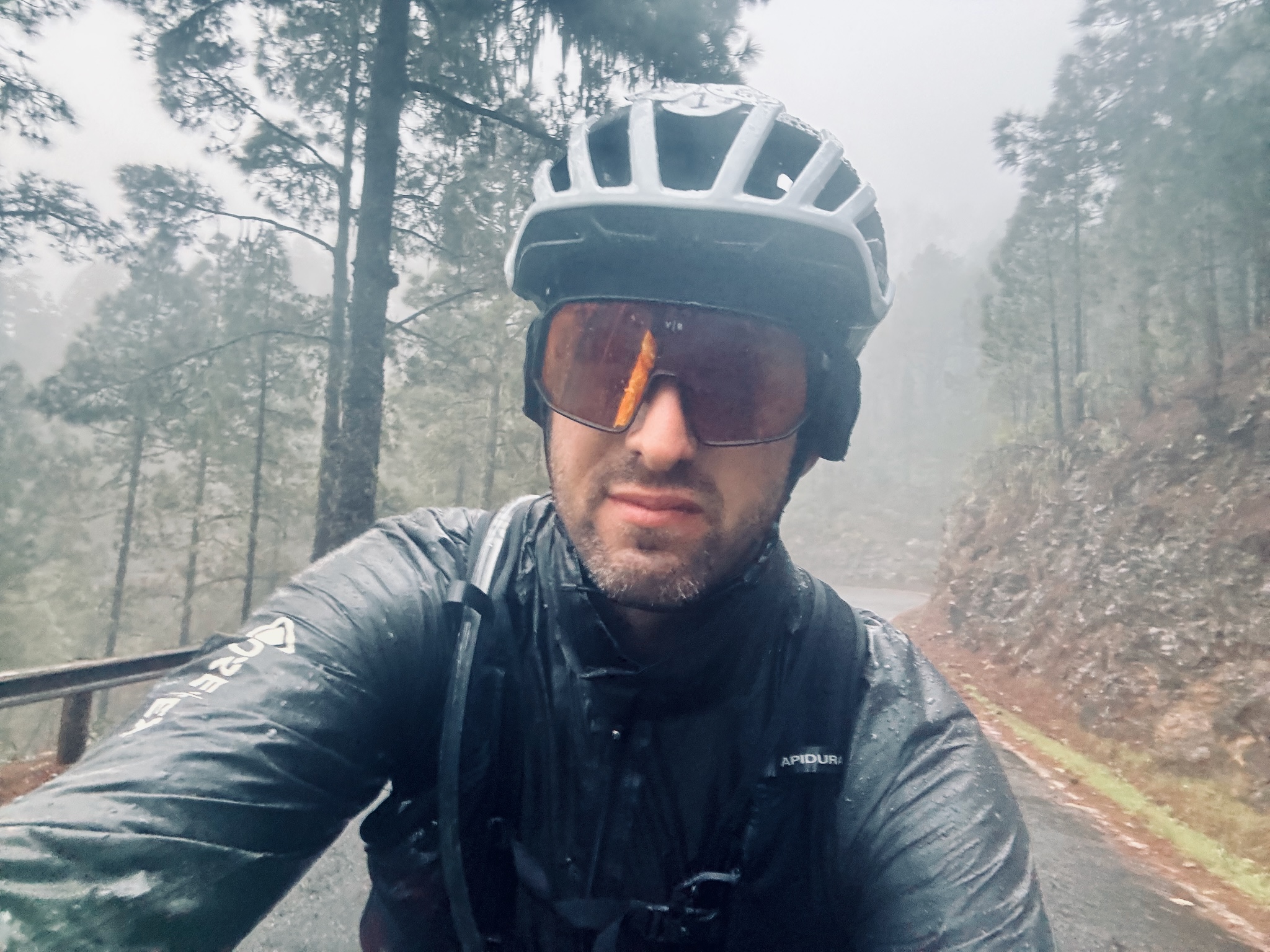
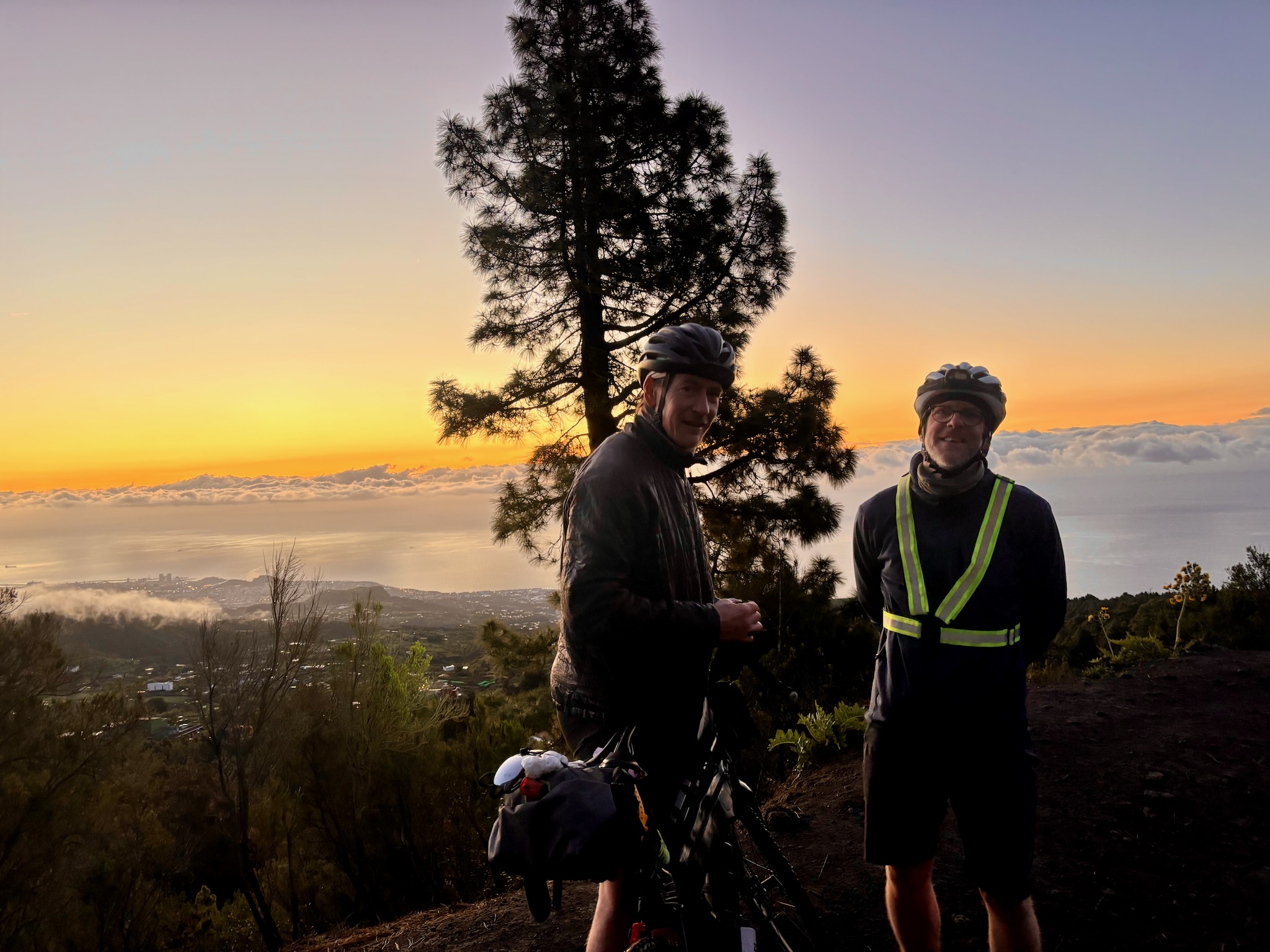
Some of what I carried up that volcano wasn't on the bike. A friend's funeral was happening at home while I sheltered from the storm. I told myself he would have kept going, that was the truest thing about him. The rest of it belongs in the book, not here.
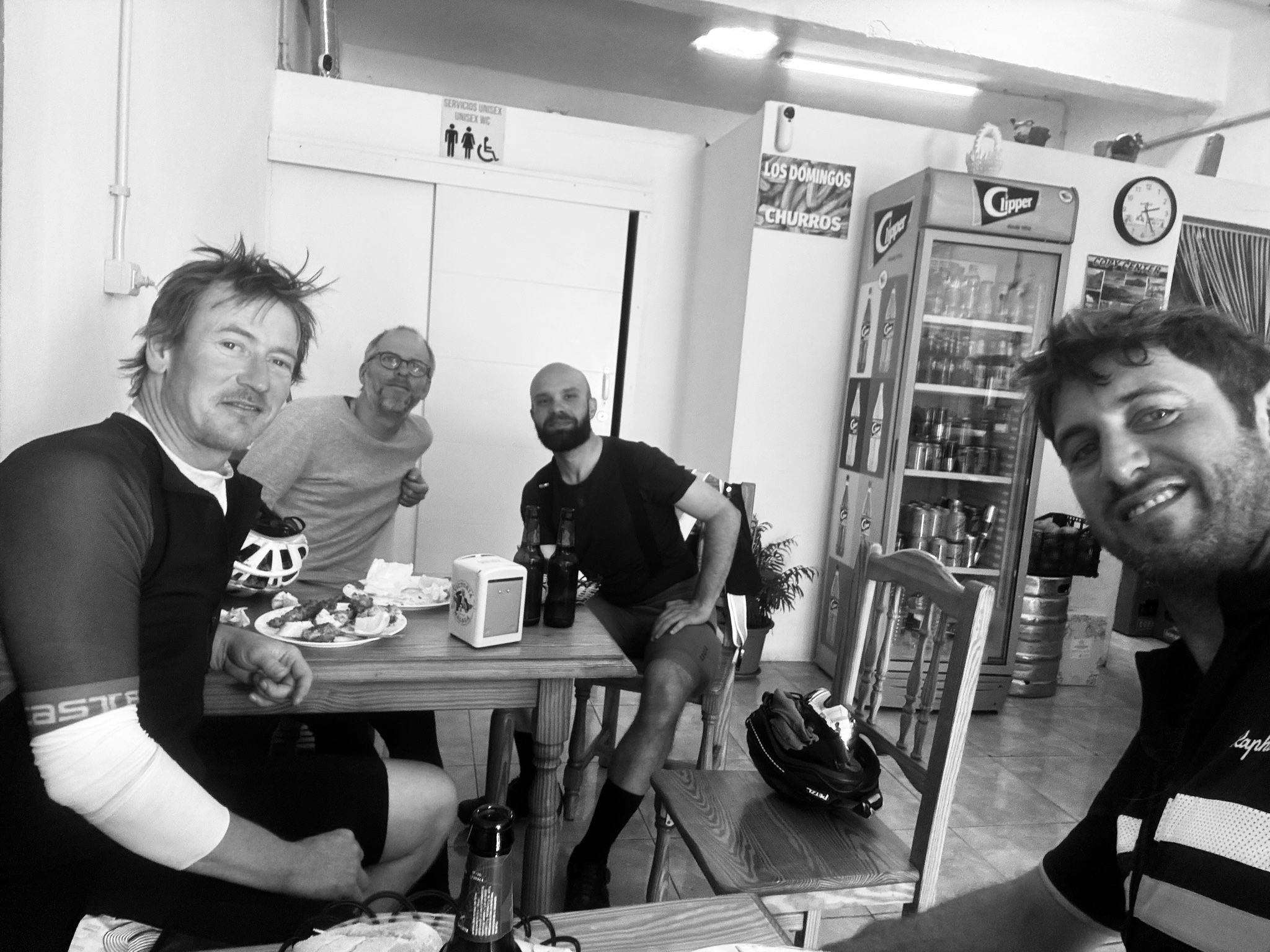
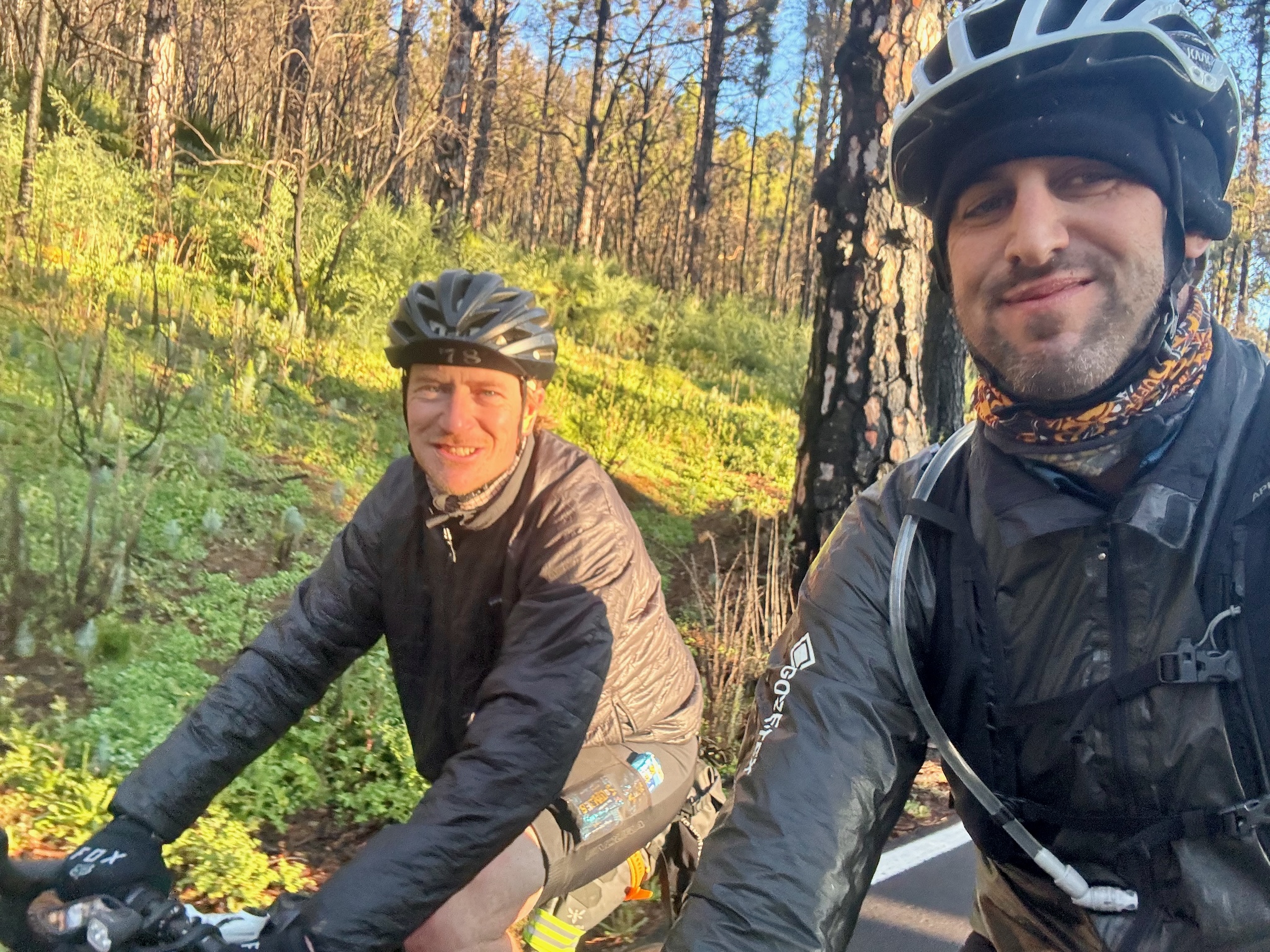
Four of five
El Hierro another time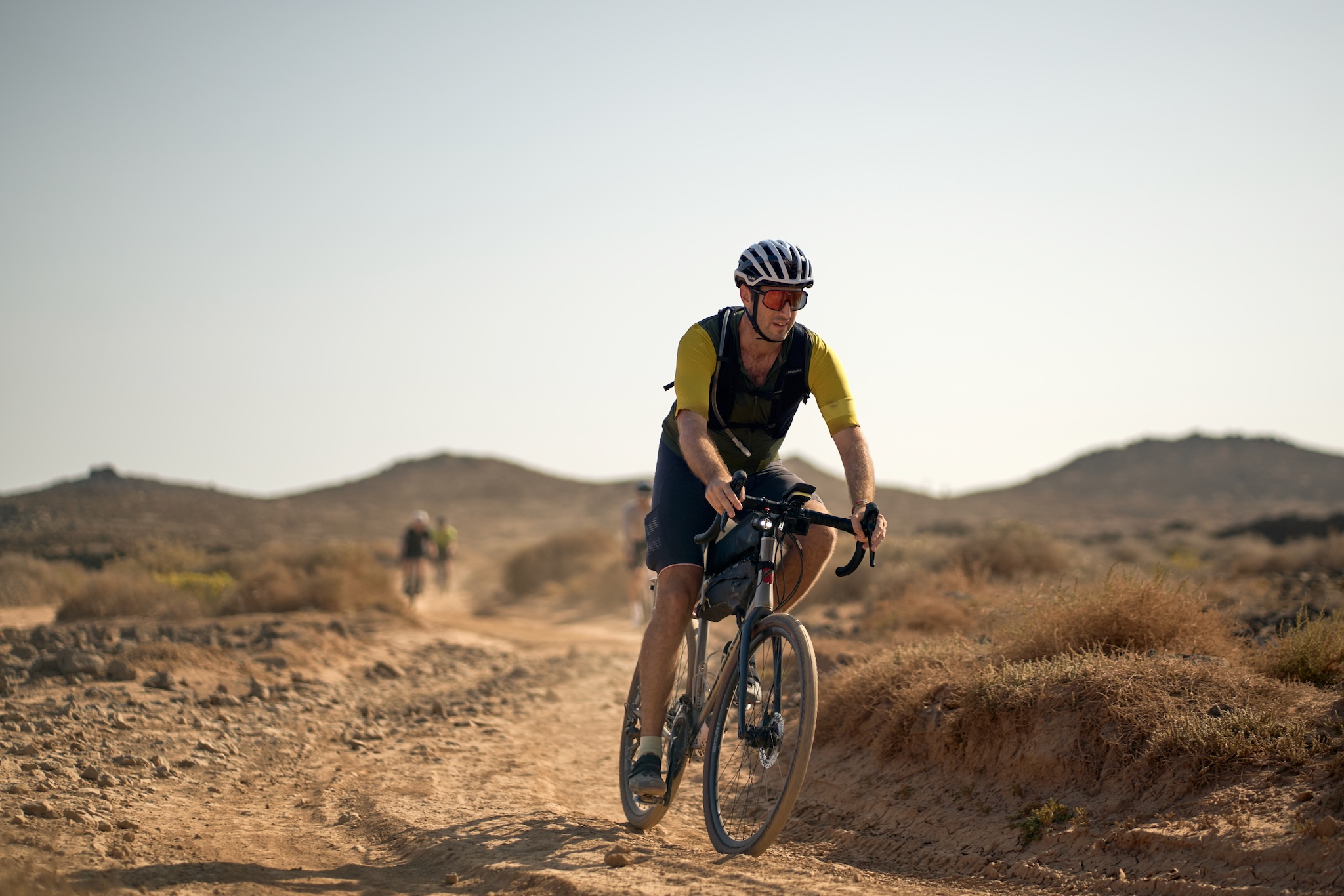
I finished at the end of Tenerife, four islands out of five, roughly seven hundred kilometres and fifteen thousand metres of climbing. El Hierro, the final island, was a ferry I couldn't risk: one boat, uncertain timing, daughters to collect. I made the call to stop. The winner did all five islands in just over seventy-two hours, a different kind of human entirely. I was out there for six days and still didn't finish. Make of that what you will.
My gear ratios weren't low enough for the steeper climbs, and I struggled where I shouldn't have. Everyone says take bigger gears on the GranGuanche. They're right. Next time I will. A year on, the trip feels like what it probably always was, a challenge, a story, and a reason to go back and finish what I started.