A Season of Climbing in the Summer of 2006
The summer between finishing our exams and graduation, Henry and I had nearly two months and no real plan beyond one ambition: get to the Alps and climb as much as possible. We loaded up my car and drove out, spending the first week or two in Switzerland before crossing into France and making Chamonix our base.
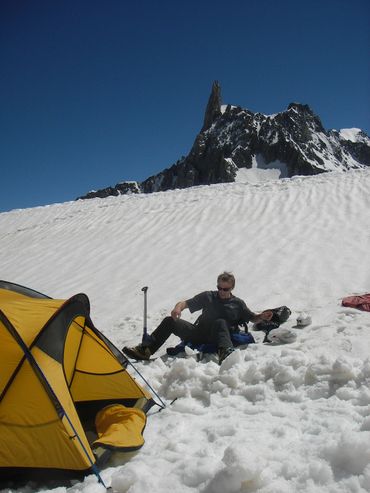
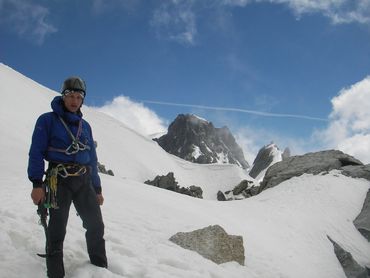
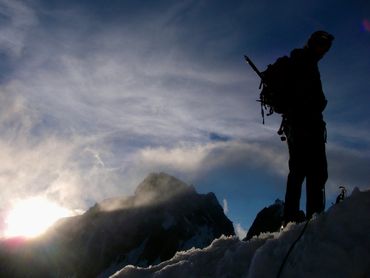
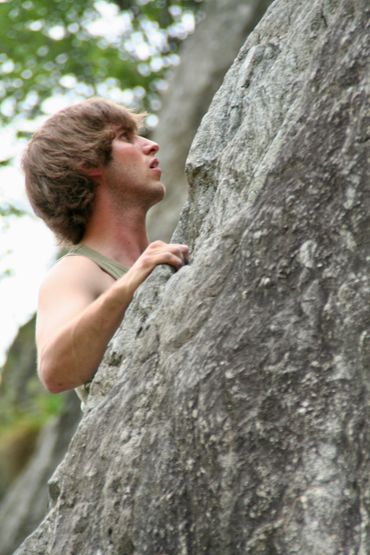
The lift passes were expensive, so we worked around them the way students do. We would load up with as much food as we could physically carry, head up onto the glacier, and camp up high for three or four days at a stretch, climbing routes on the ice and rock until the food ran out. Then we'd come back down, restock, recover, and go again. Between the mountain stints, we lived in the valley, pitching the tent at the campsite, eating spaghetti with sauce from a jar, drinking the cheapest French beer we could find, and climbing routes on both sides of the valley. It was a proper student existence, and we loved every moment of it.
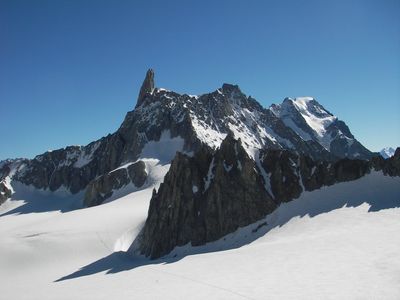
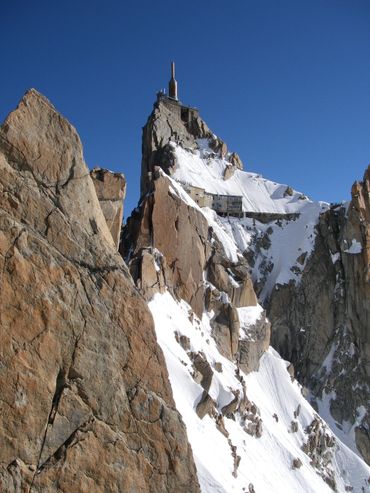
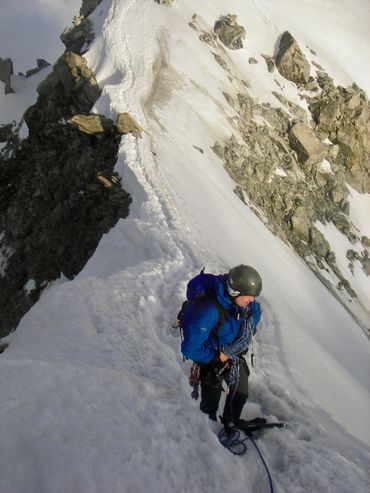
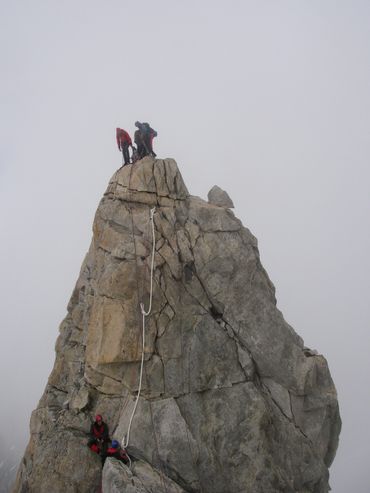
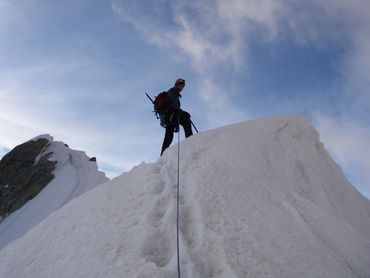
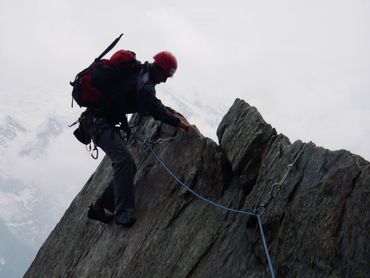
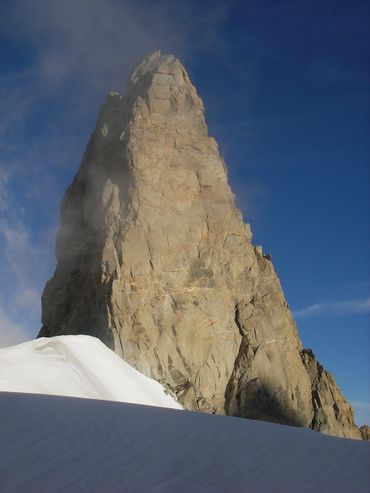
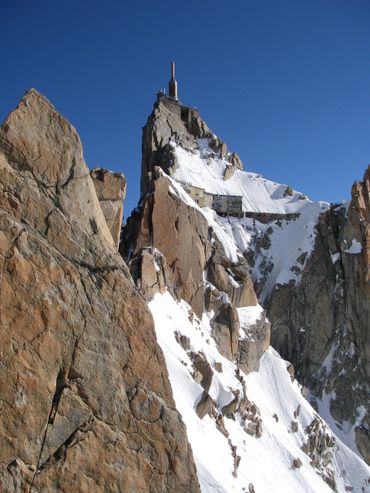
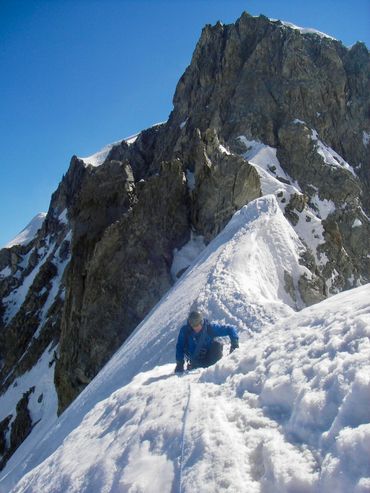
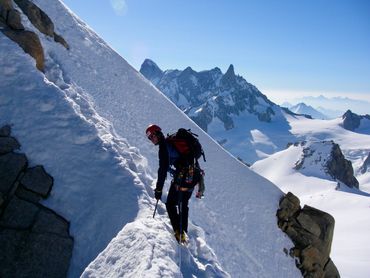
The Dent du Géant had been on our list from the start. The Giant's Tooth. A striking rock spire rising above 4,000 metres on the Italian border, its profile unmistakable against the skyline. The approach required taking the cable car up from the Italian side to the Rifugio Torino, on the opposite side of the mountain from the Aiguille du Midi. From there we camped on the glacier, setting the tent on the ice as the light faded and the temperature dropped. We were up before dawn. The route meant traversing a ridge for several hours above the glacier, working our way across exposed terrain high above the Aiguille du Midi before the rock climb itself even began. To move as light as possible on the granite, we left our bags and snow boots at the base. There was no point carrying extra weight up 300 metres of vertical rock.
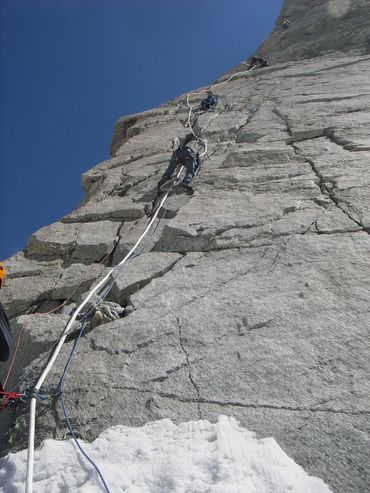
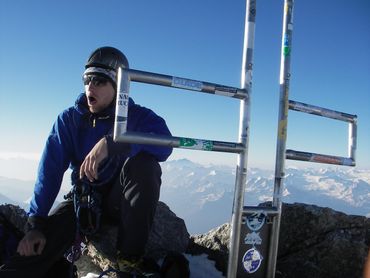
The climb itself was everything we had hoped for. Seven or eight pitches, each one 30 to 40 metres, working our way up the face with the glacier dropping away beneath us. The kind of climbing where you are entirely focused on what is in front of you, hands and feet finding the route, the world shrinking to the next hold, the next piece of protection, the next anchor. By the time we reached the top and completed the traverse across the twin summits, we were buzzing. Then we noticed the sky.
The storm had been building without us fully registering it. Up on the summit ridge, you feel it before you see it properly. A strange charge in the air, a crackling quality to everything. We knew immediately we had to move. I had traversed across to the second peak along the summit ridge and was slightly below Henry, who was still above me, when I heard it. Not just a shout. A scream.
I've been struck by lightning. I've been struck by lightning.
My first instinct, I will admit, was almost disbelief. But crucially, I had not yet started the main abseil down the pitch below me. That was the only reason I could get back to him at all. I climbed back up as fast as I could.
What I found when I reached him stopped me cold. His waterproof jacket was burned and melted in places. His Gore-Tex, the carabiner on his harness, both charred. What had happened, as best we could piece together, was that the lightning had entered through his arm, travelled through his elbow, passed through his body, and exited through the carabiner on his harness. In any other circumstance, that is a death sentence. The current fries the organs. The doctors at the hospital in Chamonix told us later they had never seen anything like it. They photographed the burns for research purposes. That he had survived was, by any clinical measure, extraordinary.
But Henry did not look like a man who had just cheated death. Shaken, yes. But composed. Focused. We both understood that the mountain was not finished with us yet.
I got through to Mountain Rescue on my mobile. First the Italian side, then the French, the signal coming and going, the storm closing in around us. Eventually a helicopter was scrambled. When it arrived, a gendarme descended on the winch, clipped Henry into his harness, and without ceremony the helicopter simply banked away into the grey and was gone. They circled and came back for me.
I have done a great many things in the mountains that have frightened me. But hanging beneath a rescue helicopter in my climbing harness, thousands of metres above the Mer de Glace, is the most terrifying experience of my life. The glacier below looked impossibly small and impossibly far down. There was nothing between me and it but the harness, the wire, and the noise of the rotors overhead. Then they winched me up, and it was over.
At the hospital, the doctors were visibly shaken. The burn marks, the entry and exit points, the fact that his organs had simply kept working. They photographed everything. Henry stayed in hospital for several days before being flown home by air ambulance. I was left in the valley, abruptly alone.
The absurdity was not lost on me. We had left our boots at the base of the climb. Henry had been admitted still wearing his rock climbing shoes. I had to walk back across Chamonix in mine to retrieve our gear. Our tent was still up on the glacier. Exhausted and with nowhere to sleep, I was taken in for the night by some mountain guides we had befriended at the campsite. The following morning I went back up to collect everything we had left behind.
We did not see each other again until graduation, a few weeks later. Henry walked in looking, by any reasonable assessment, absolutely fine. He had a skin graft running from his backside to his elbow where the surgeons had repaired the damage. He was ready for the next challenge. Within weeks, we were on a plane to Africa together for a very different kind of adventure.
Some people survive something like that and are changed by it. Henry just got on with things. That, more than anything, is what I remember.